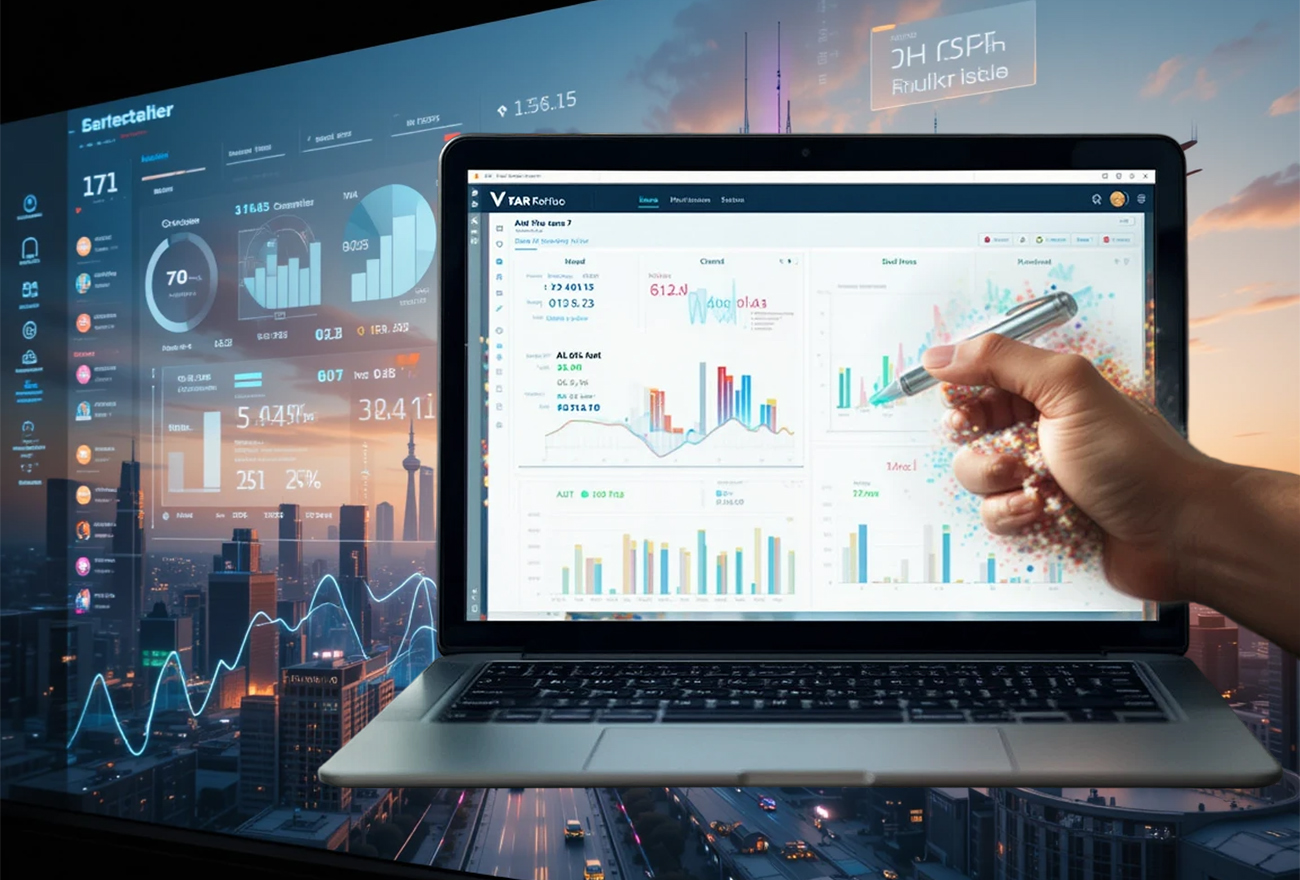
Transform raw data into actionable insights with our advanced AI algorithms. Leverage AI to interpret large datasets, uncover hidden patterns, and present insights in a user-friendly format.
Intelligent Process Automation
Automate manual workflows and back-office operations, such as data entry, invoice processing, and document management.
Custom AI Solutions
Tailored AI models built to solve your business’s specific challenges, from concept to deployment. AI Solution Design & Development: We design and develop custom AI solutions specific to your business needs, integrating machine learning models and algorithms that enhance your operations.
AI for Innovation & R&D
Accelerate research, product development, and market innovation with our AI-driven methodologies. Harness AI to process and analyze vast amounts of research data, helping to innovate faster.
AI Strategy & Consulting
Develop a comprehensive AI strategy that aligns with your business goals, ensuring long-term success. Evaluate your current infrastructure and capabilities to determine how AI can be effectively integrated into your business.
AI Solutions for Industry-Specific Needs
Industry-specific AI solutions designed to tackle unique challenges across various sectors. AI for diagnostics, predictive healthcare models, and operational efficiency.
Industry: Consumer electronics and streaming services.
IT Infrastructure: Problems
• Data Storage: Customer test interaction data was centralised in
Google BigQuery, providing a scalable and fast data processing environment.
• Content Management Systems (CMS): Integrated with a CDN to deliver streaming services efficiently, though advanced customer behaviour analytics were not implemented.
• Existing Tools: Tableau was used for reporting and visualisation,
but it required integration with AI models to surface more
profound insights.
Solutions
To address the challenge, we developed an AI-powered customer insights platform leveraging the existing data infrastructure with the following components: 1. AI Models: Built predictive AI models using TensorFlow and sci-kit-learn to analyse customer interaction data stored in Google BigQuery. The models identified patterns and trends in customer preferences, such as desired TV sizes, price sensitivity, and frequently consumed content genres.
2. Integration with Tableau: Connected the AI models directly to Google BigQuery to process large datasets efficiently. Built interactive Tableau dashboards to visualise insights and make them accessible to various teams
Industry: Telecommunications and internet service provision
IT Infrastructure: Problems
• Databases: Company A used a combination of relational databases (Oracle, PostgreSQL) for structured data and NoSQL solutions (MongoDB, Cassandra) for unstructured data such as client behaviour and network logs.
• Siloed Systems: Internal IT systems were fragmented, with country-specific PoP planning tools operating independently. This lack of interoperability hindered cross-country planning and visibility.
• Predictive Systems: Basic network planning tools were employed to analyse historical data, but they lacked the sophistication to accurately incorporate dynamic variables or forecast future client movements.
• Network Monitoring: Network performance and utilisation metrics were stored separately from client demand data, limiting the ability to optimise PoP placement holistically
Solutions
To address these challenges, we developed and deployed an AI-driven dynamic planning model
with the following components:
1. Data Integration: Built data pipelines using Python and AWS Glue to connect siloed
databases from different regions. Centralised customer, network, and operational data into
an AWS Redshift data warehouse, enabling comprehensive analysis.
2. AI-Powered Predictive Model: Developed an AI model using TensorFlow to predict client
movement patterns and expansion trends based on historical data and market indicators.
Incorporated dynamic variables such as economic growth, technological adoption rates, and
market competition to forecast future PoP requirements.
3. Optimisation Engine: Used advanced optimisation algorithms (such as genetic algorithms) to
identify optimal PoP locations based on cost, client proximity, and expected bandwidth
demand.
4. Visualisation and Reporting: Created real-time dashboards using Tableau to visualise PoP
placement scenarios and provide actionable insights for strategic decision-making
Industry: Healthcare
IT Infrastructure: Problems
• Databases: Patient data was stored in a mix of legacy relational databases (SQL Server), modern solutions like Azure SQL Database and bespoke healthcare systems at different trusts. Data fragmentation across trusts hindered comprehensive analysis.
• Data Integration: Palantir Foundry was already used to integrate data from disparate systems. However, the sheer volume and complexity of cleansing and prioritising patient data remained a significant challenge.
• Workforce Optimization Tools: Existing scheduling and resource allocation tools were rudimentary and lacked AI-driven capabilities to dynamically adjust to changing demands.
Solutions
To address these challenges, we developed an AI-driven patient prioritisation and resource optimisation platform leveraging the existing Palantir Foundry infrastructure:
1. Data Integration and Cleansing: Enhanced the Palantir Foundry set-up to consolidate and cleanse patient data from SQL Server, Azure SQL, and other trust-level systems. Implemented data validation and deduplication pipelines to remove outdated cases (e.g., patients no longer required treatment).
2. AI Models for Prioritisation: Built AI models using TensorFlow to prioritise patients based on risk factors such as condition severity, time elapsed since referral, and demographic data. Integrated predictive models to identify patients at risk of worsening conditions if left untreated.
3. Resource Optimisation: Developed an optimisation engine to dynamically allocate healthcare resources (e.g., professionals, facilities, and surgical slots) based on patient priorities. Enabled real-time adjustments to workforce schedules and resource allocation to meet fluctuating demands.
4. Visualisation and Reporting: Designed interactive dashboards in Power BI to provide healthcare administrators with real-time insights into (1) High-priority patient lists. (2) Resource utilisation metrics. (3) Progress toward backlog reduction goals.
Industry: Broadband and phone network services
IT Infrastructure: Problems
• Databases: Company C relied on Oracle and SAP systems to store customer and project data. These systems operated in silos, preventing seamless data integration and predictive analysis.
• GIS Integration: Geospatial Information Systems (GIS) were used to map broadband installation sites. However, GIS data was isolated and not fully integrated with other IT systems, making it difficult to assess risks tied to geographic locations.
• Dashboards: Reporting and monitoring relied on static dashboards created in Qlik Sense, which provided retrospective insights but lacked real-time or predictive capabilities.
• Project Management Systems: Existing tools provided limited functionality for forecasting potential risks and associated costs, relying heavily on manual inputs.
Solutions
To address these challenges, we developed an AI-driven project risk assessment platform with
the following components:
1. Data Integration: Leveraged ETL pipelines to integrate Oracle, SAP, and GIS data into a unified Snowflake data warehouse. Ensured all historical project, customer, and geospatial information was accessible from a single platform for comprehensive analysis.
2. Machine Learning Model: Built a predictive model using XGBoost, a gradient-boosting algorithm, to identify high-risk broadband installation projects. Trained the model on historical data, focusing on project location, permitting requirements, proximity to critical infrastructures, and prior delays or cost overruns.
3. Real-Time Insights: Deployed real-time dashboards using Qlik Sense, powered by the Snowflake data warehouse, to provide dynamic insights into ongoing projects. Flagged high-risk projects for early intervention by project managers.
4. Risk Scoring System: Implemented a risk scoring mechanism that assigned a risk level to each project based on predictive model outputs. High-risk projects were highlighted for proactive management
Industry: Telecommunications and internet service provision
IT Infrastructure: Problems
• Databases: Company A used a combination of relational databases (Oracle, PostgreSQL) for structured data and NoSQL solutions (MongoDB, Cassandra) for unstructured data such as client behaviour and network logs.
• Siloed Systems: Internal IT systems were fragmented, with country-specific PoP planning tools operating independently. This lack of interoperability hindered cross-country planning and visibility.
• Predictive Systems: Basic network planning tools were employed to analyse historical data, but they lacked the sophistication to accurately incorporate dynamic variables or forecast future client movements.
• Network Monitoring: Network performance and utilisation metrics were stored separately from client demand data, limiting the ability to optimise PoP placement holistically.
Solutions
To address these challenges, we developed and deployed an AI-driven dynamic planning model
with the following components:
1. Data Integration: Built data pipelines using Python and AWS Glue to connect siloed databases from different regions. Centralised customer, network, and operational data into an AWS Redshift data warehouse, enabling comprehensive analysis.
2. AI-Powered Predictive Model: Developed an AI model using TensorFlow to predict client
movement patterns and expansion trends based on historical data and market indicators.
Incorporated dynamic variables such as economic growth, technological adoption rates, and
market competition to forecast future PoP requirements.
3. Optimisation Engine: Used advanced optimisation algorithms (such as genetic algorithms) to
identify optimal PoP locations based on cost, client proximity, and expected bandwidth demand.
4. Visualisation and Reporting: Created real-time dashboards using Tableau to visualise PoP placement scenarios and provide actionable insights for strategic decision-making.
Industry: Consumer electronics and streaming services
IT Infrastructure: Problems
• Data Storage: Customer test interaction data was centralised in Google BigQuery, providing a scalable and fast data processing environment.
• Content Management Systems (CMS): Integrated with a CDN to deliver streaming services efficiently, though advanced customer behaviour analytics were not implemented.
• Existing Tools: Tableau was used for reporting and visualisation, but it required integration with AI models to surface more profound insights.
Solutions
To address the challenge, we developed an AI-powered customer insights platform leveraging the existing data infrastructure with the following components:
AI Models: Built predictive AI models using TensorFlow and sci-kit-learn to analyse customer interaction data stored in Google BigQuery. The models identified patterns and trends in customer preferences, such as desired TV sizes, price sensitivity, and frequently consumed content genres.
Integration with Tableau: Connected the AI models directly to Google BigQuery to process large datasets efficiently. Built interactive Tableau dashboards to visualise insights and make them accessible to various teams.
Actionable Insights: The dashboards provided tailored insights for different departments:
Product Team: Insights into preferred TV features, such as size, ease of navigation, and display quality, to refine the Smart TV design.
Finance Team: Optimal pricing strategies and revenue projections based on customer preferences.
Content Team: Recommendations on which genres and shows to prioritise in the TV’s recommendation engine to boost engagement